THE ELEC, a Korean electronics-industry publication, sat down with CEO Kim Dae-hee for its Y Insight interview series, published on April 6, 2026, as an article and a 21-minute video recorded on March 6. Its sister outlet Y-ELEC ran the same interview. The video is in Korean; the summary below is ours.
Kim describes the company as a vision infrastructure company for physical AI, founded in June 2023. Physical AI sees, perceives, judges, and acts; the company supplies everything up to the point of control. It designs its own camera modules and edge boards, sources the processors, and writes the firmware, system software, and algorithms that run on them.
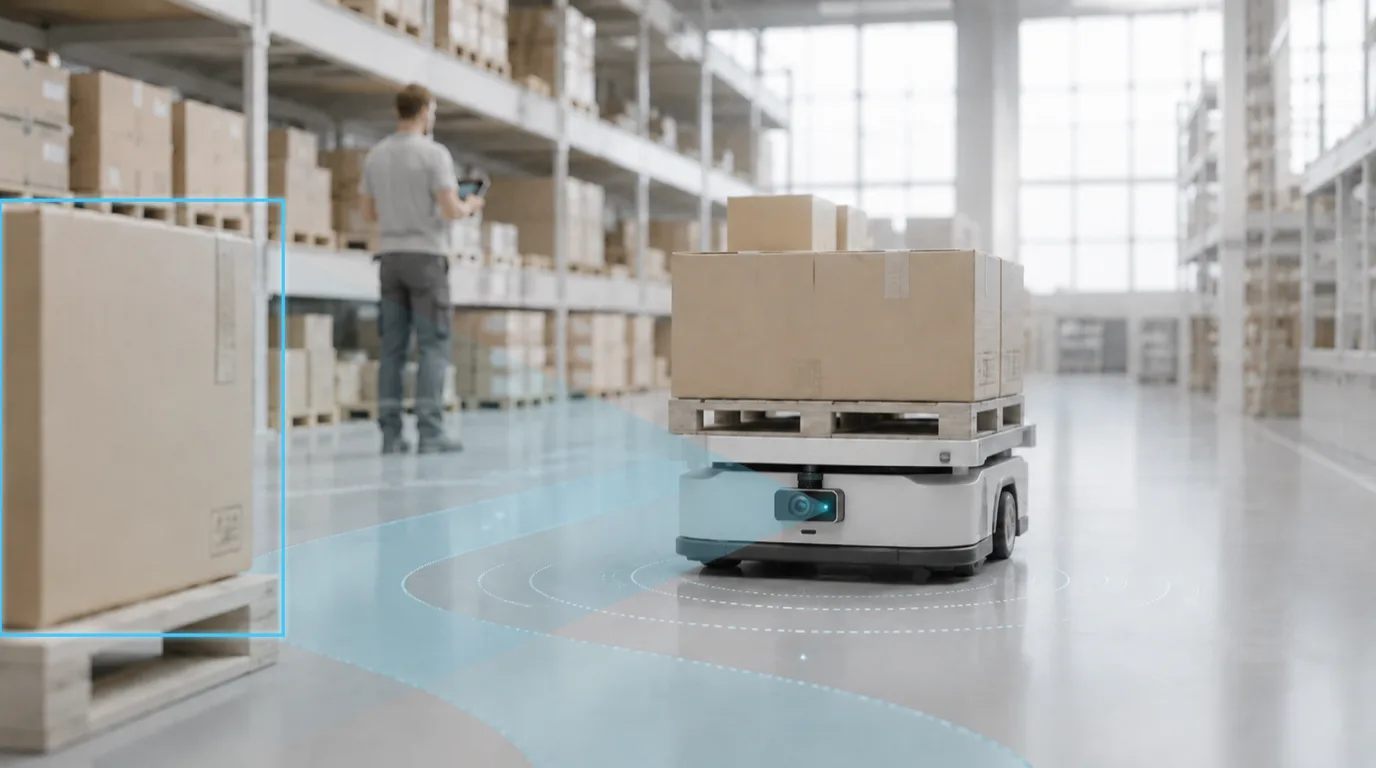
His working example is a logistics customer that commissioned a 3D camera module and a volume-measurement algorithm running on the edge SoC rather than on a server. On a conveyor moving at 3.2 meters per second, Kim says, the system measured parcels in real time to within ±5 mm, feeding invoicing and damage detection. A quarry operator in Malaysia asked whether the same approach could check how much rock a truck actually carries.
Asked about competition, Kim points to stereo vision, the most common method in robotics today, and explains why the company leads with ToF (time of flight). Stereo error grows sharply beyond a certain distance because it triangulates from two views; ToF, which times a pulse of light, stays linear. A single module also takes less space and less processing than a stereo pair. In practice, he adds, combining sensors gets closer to 100 percent than any single method, and the company supplies both.
The healthcare thread is an X-ray system for Samsung Electronics’ medical device business. An RGB and 3D camera pair positions the collimator on the patient and measures body thickness so that the radiation dose can be set from data rather than by eye. At the time of recording, reliability testing was in its final stage, with an order expected within the month and production the month after; mobile X-ray units for intensive care were next.
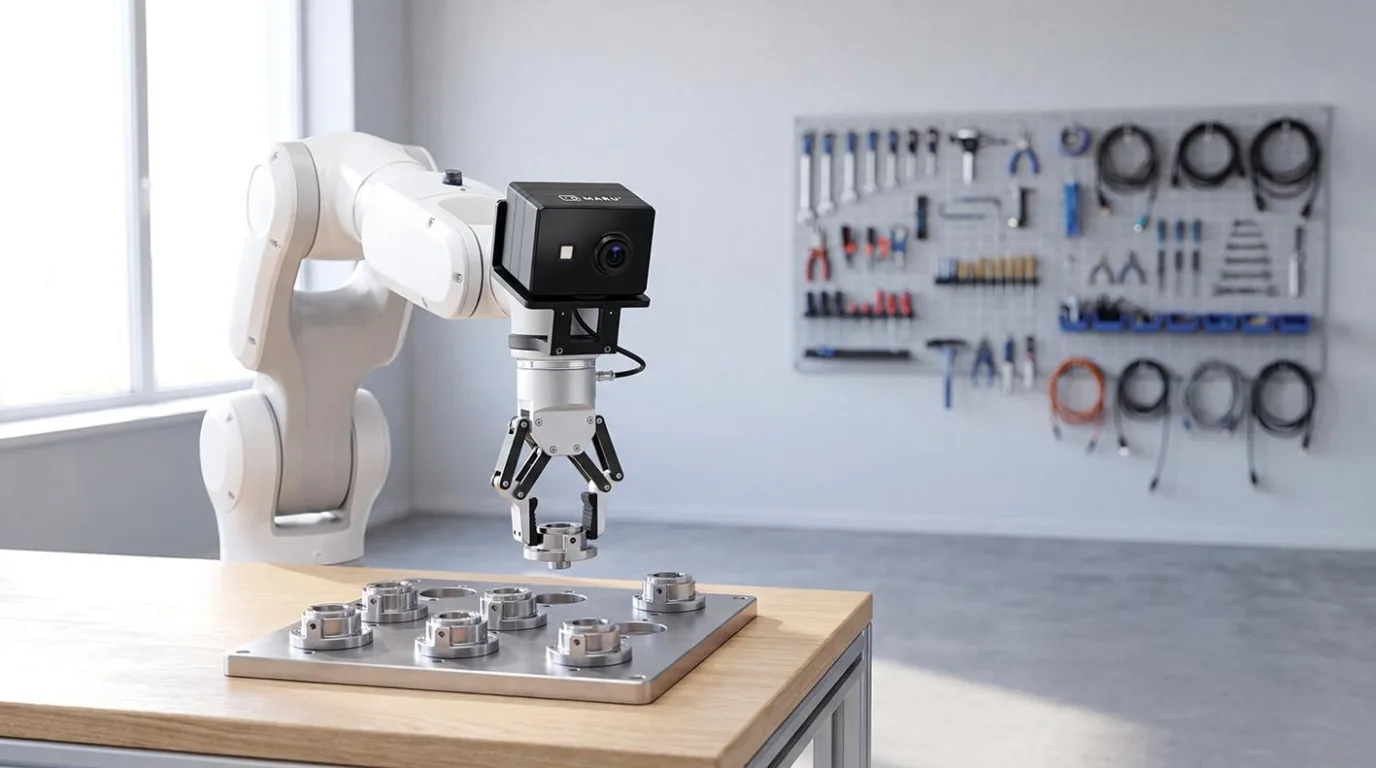
On robotics, Kim says 3D sensing is required for any machine that grasps, avoids, or maps space, whatever its form, and that discussions are under way with companies in Germany, Singapore, the United States, and the Middle East, across automation, smart factories, robotics, and healthcare, all on the same platform.
When I walk an exhibition floor, the first thing I look at on every robot is which camera it carries. There are only a few, and I think: we need to replace that with ours.
Source. THE ELEC, “[Y인사이트] 모디전스비전, AI ‘눈’으로 3D비전·로봇시장 공략” (in Korean), April 6, 2026. Summary and translation by ModigenceVision.
Also covered by. The same news, as reported by other outlets.
- Y-ELEC, “모디전스비전, AI ‘눈’으로 3D비전·로봇시장 공략” (April 6, 2026, in Korean)