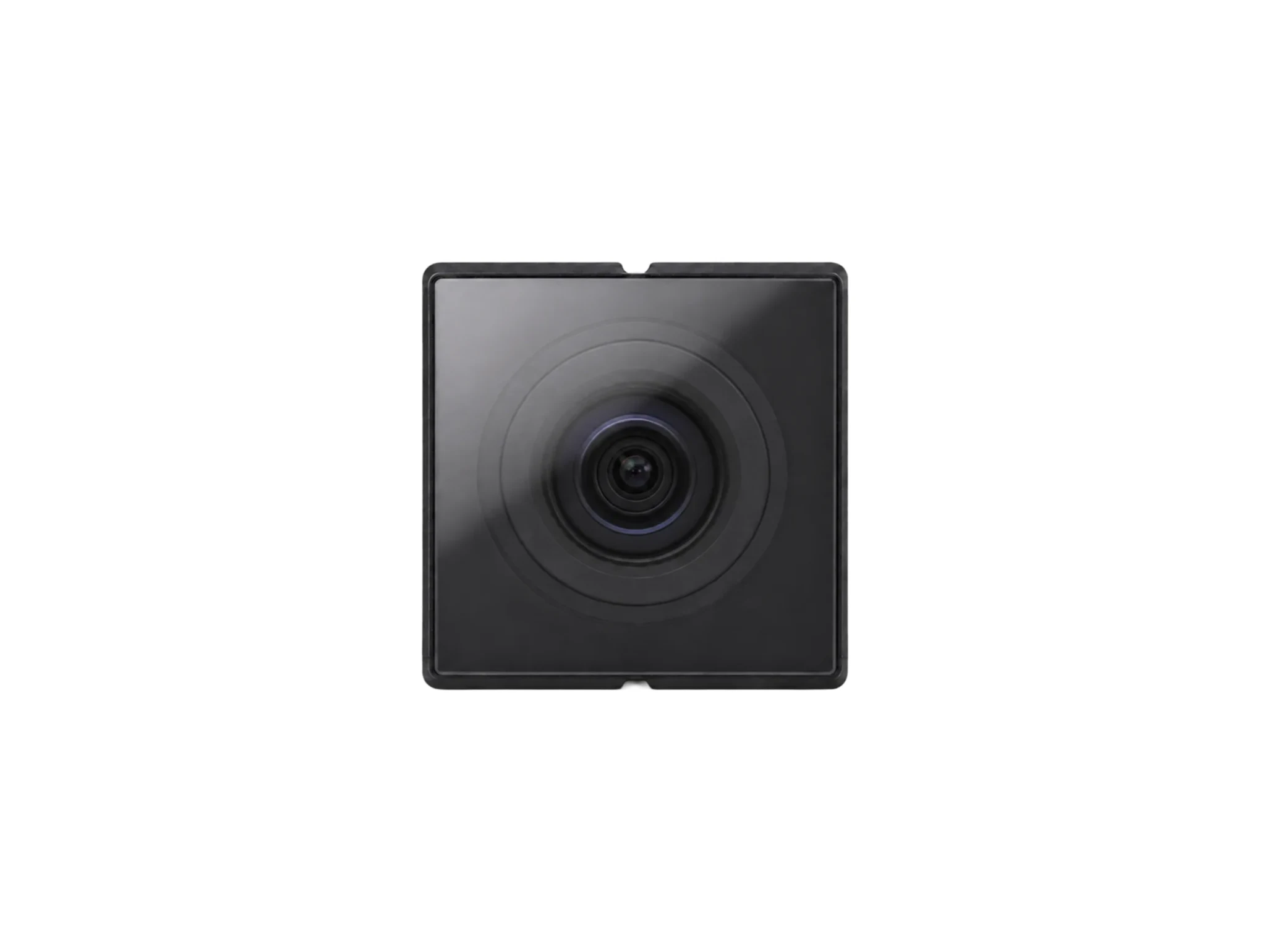
Vision narrow
Detail and reach for part identification at the working distance of the arm.
Applications
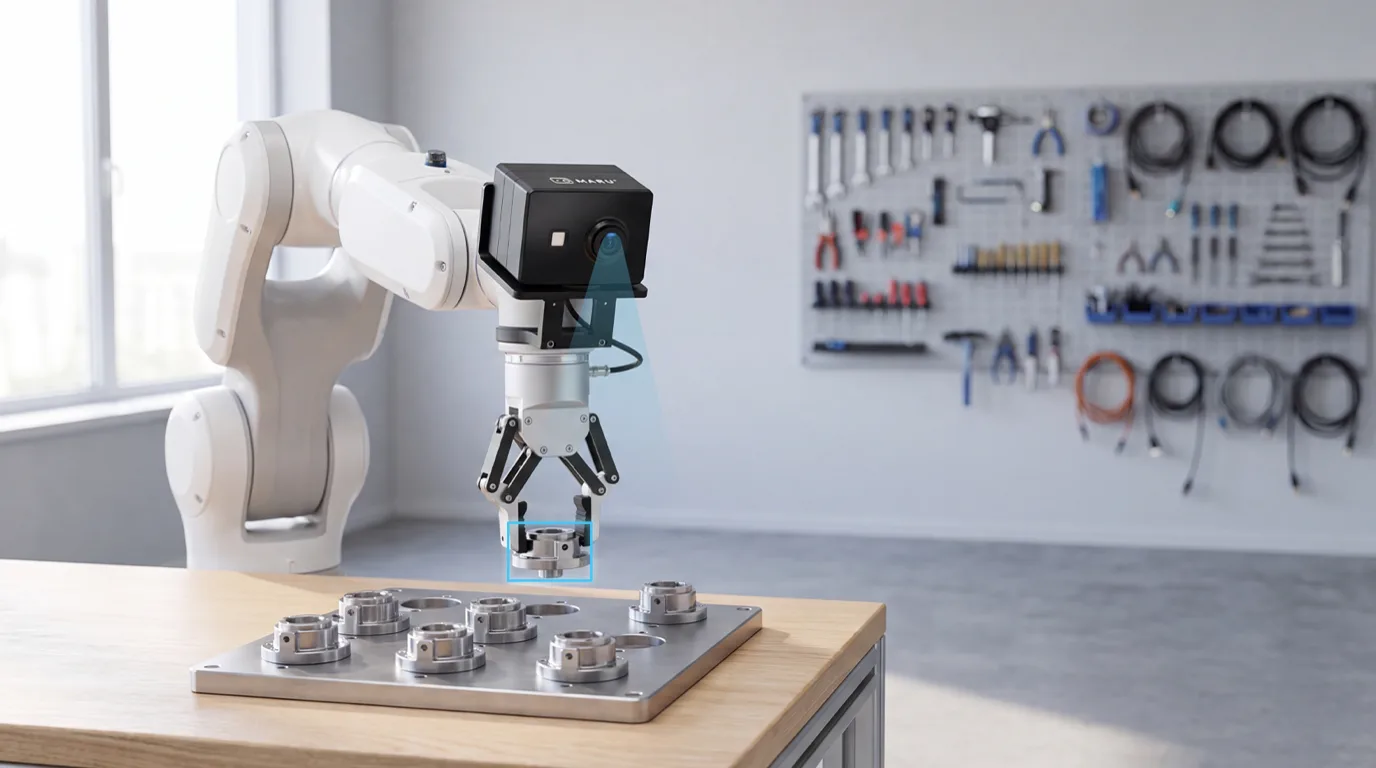
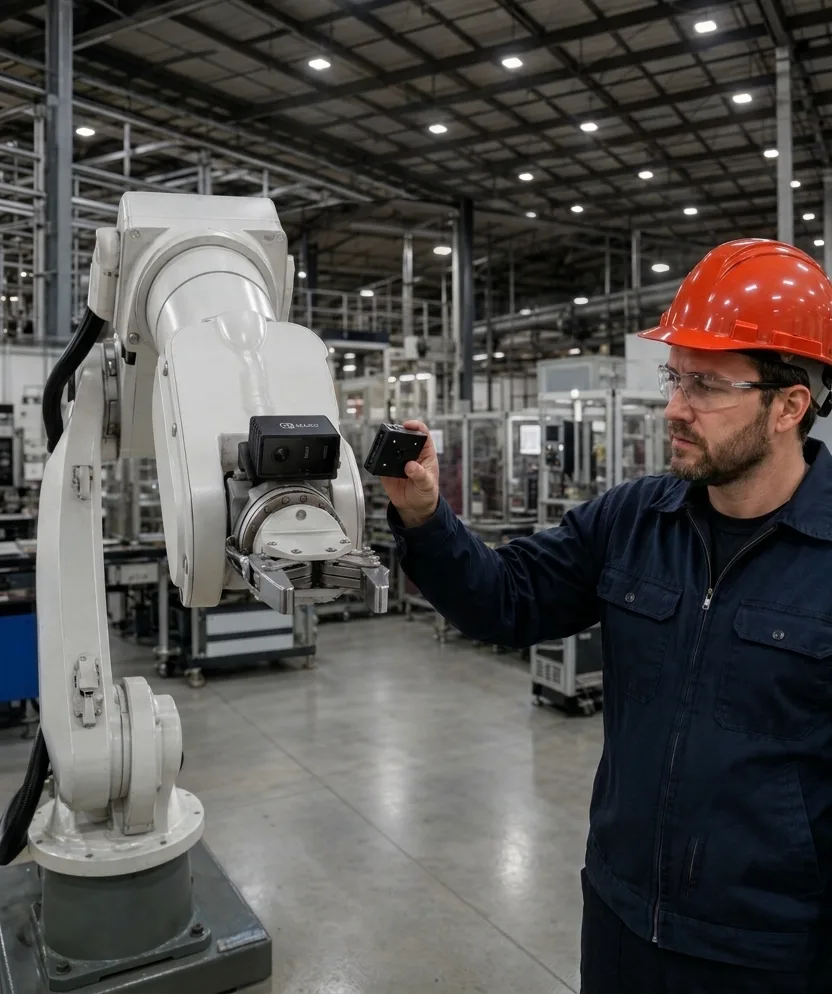
Arm guidance, pick-and-place, and bin picking — and the mobile robots that carry the parts between them — with metric depth measured where the machine acts.
Challenge
A 2D camera tells the arm what an object looks like. It does not tell it how far away the object is, how it is tilted, or whether the bin behind it is empty. Every one of those is a metric question.
The usual answer is to bolt a depth sensor next to a color camera and reconcile the two afterward. That means two calibrations, two clocks, two coordinate frames, and integration work that recurs on every new cell. The industry cost of that reconciliation is what the platform removes.
Configuration
Detail and reach for part identification at the working distance of the arm.
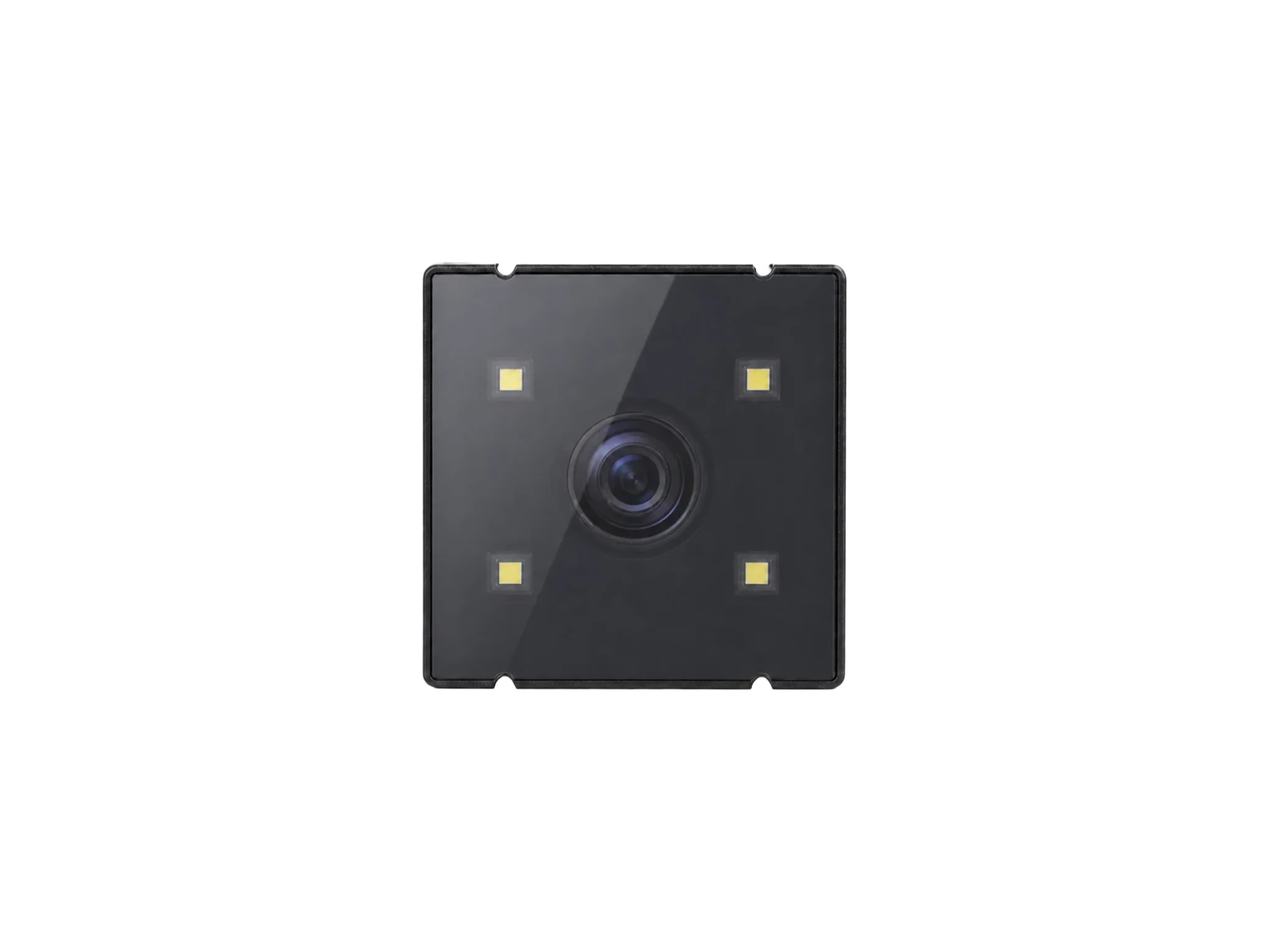
Depth across the bin, 940 nm at 0.2–20 m with ±0.5% accuracy.
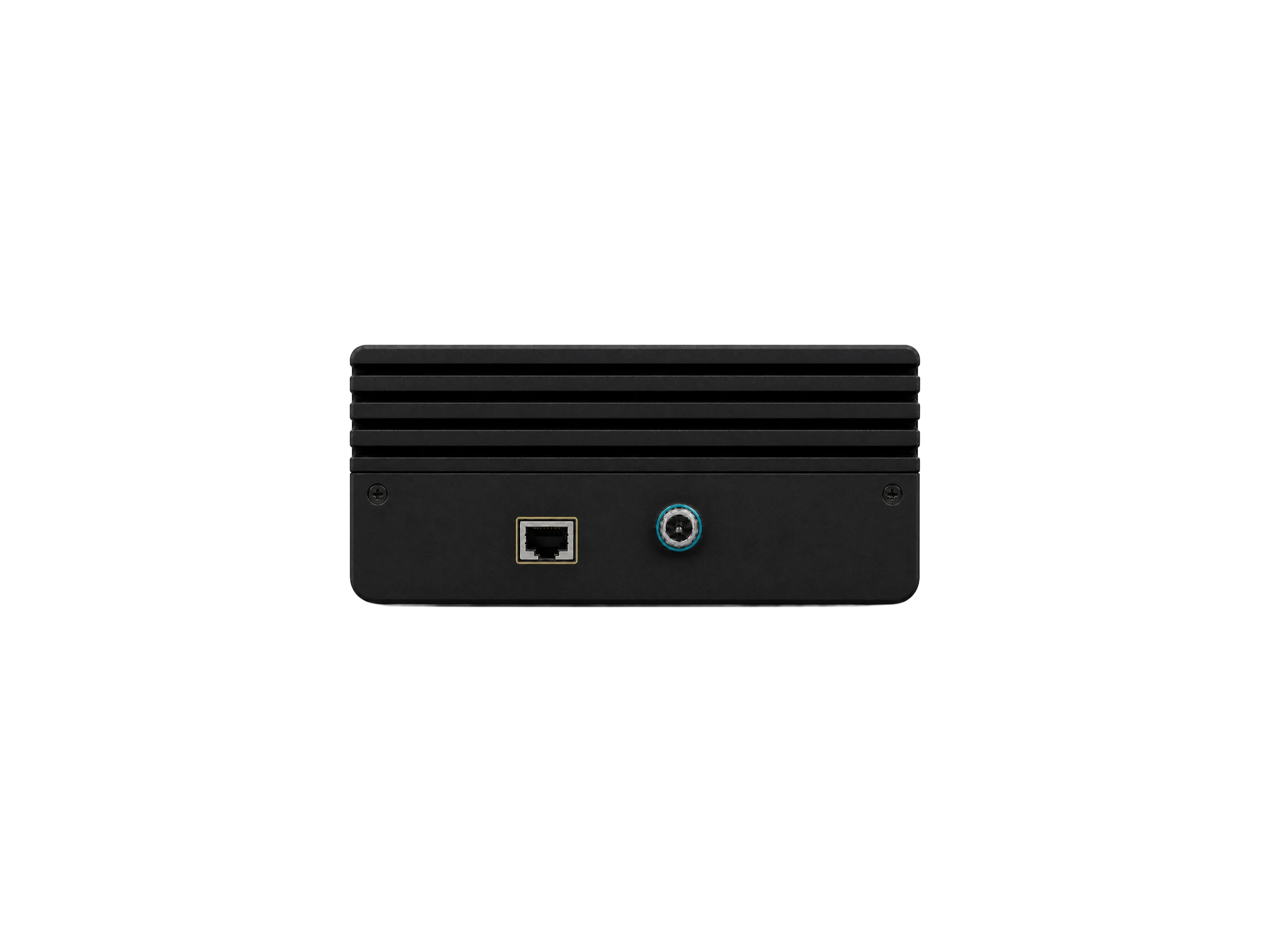
One cable to the cell controller; the same body across a fleet of arms.
Outcome
Figures for your program come with the proposal.