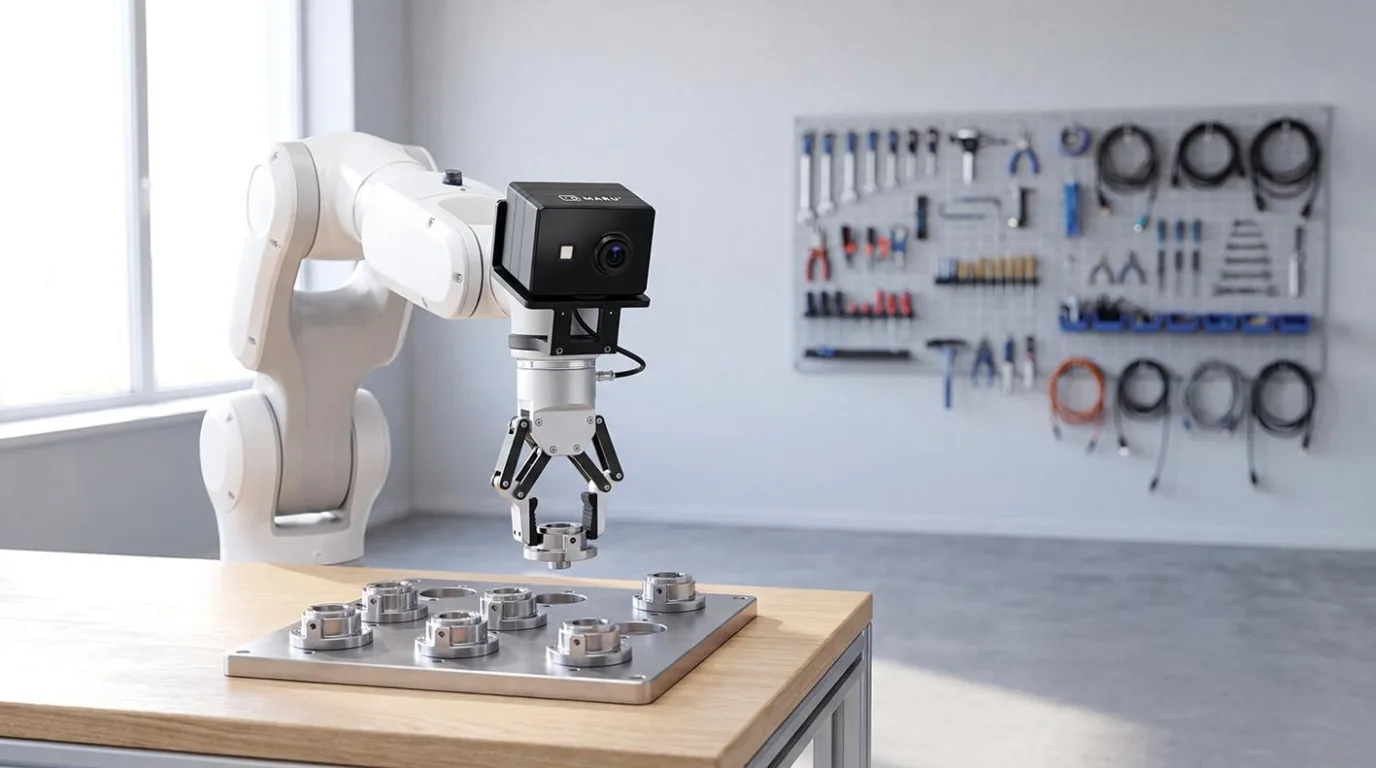
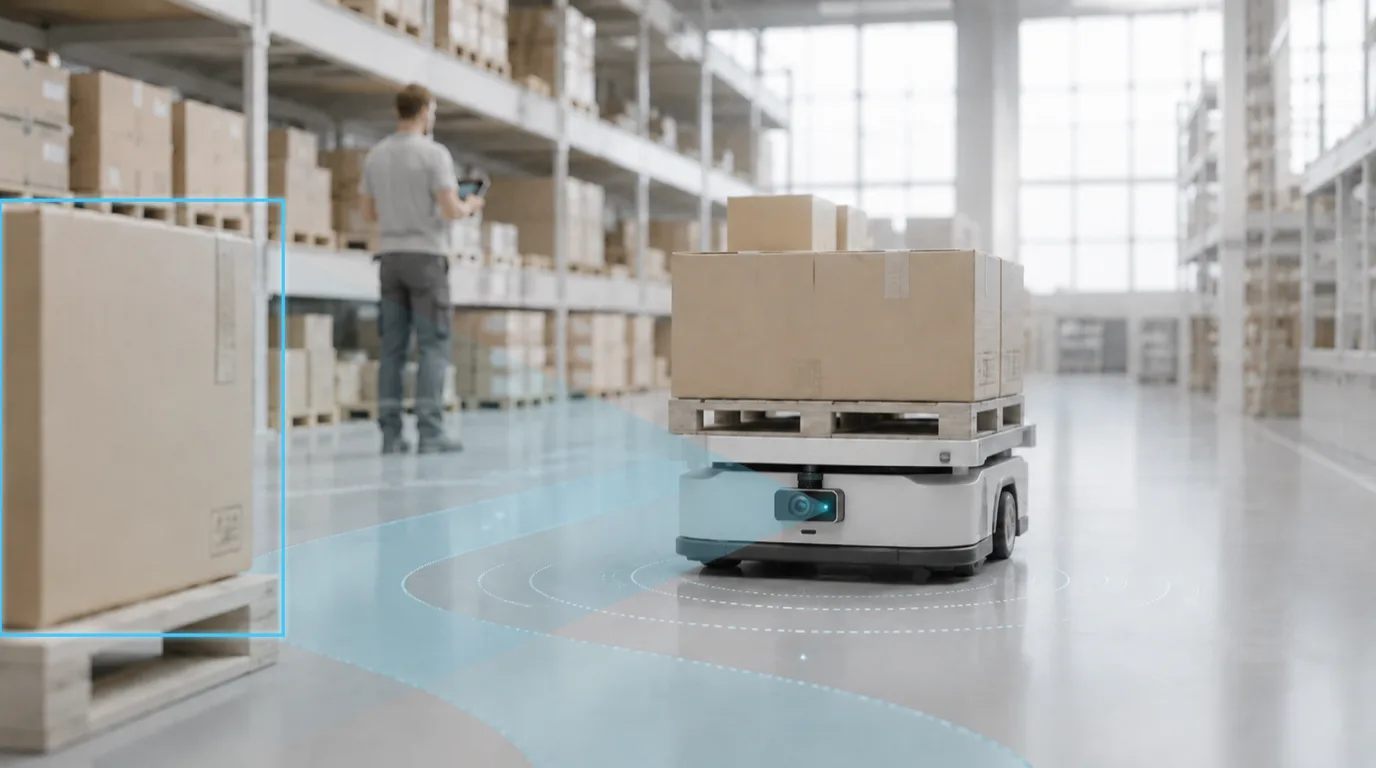
ModigenceVision took part in Try Everything 2026, the global startup festival at Dongdaemun Design Plaza (DDP) in Seoul on September 9–10, and Digital Chosun, a Seoul-based online news outlet, interviewed the company at its booth for a piece published on September 14, 2026.
The outlet describes the company as a developer of 2D and 3D visual perception for physical AI, autonomous driving, and next-generation robotics. Its platform exists for the robot and AI developers that the parts ecosystems of smartphones and cars leave out: board design, firmware, and vision algorithms delivered together and fitted to the site.
Since its founding in 2023 the company has built up references: a patient volume and precision distance-measurement module for a major Korean electronics group’s mobile X-ray equipment, a high-speed cargo volume classification system for warehouse automation, and outdoor autonomous delivery robots.
At DDP the company showed the MARU platform, whose line is “One System. Complete Vision.” The platform runs from sensing design fitted to the equipment, through the choice of module combination, to software validation and volume production. The unit on the table was one of the company’s camera modules already in production. For the platform the article lists sensing from 0.2 to 20 meters with a 3D ToF sensor lit by a 940 nm VCSEL, and the full 2D and 3D vision stack running on the device at a latency of 10–20 milliseconds.
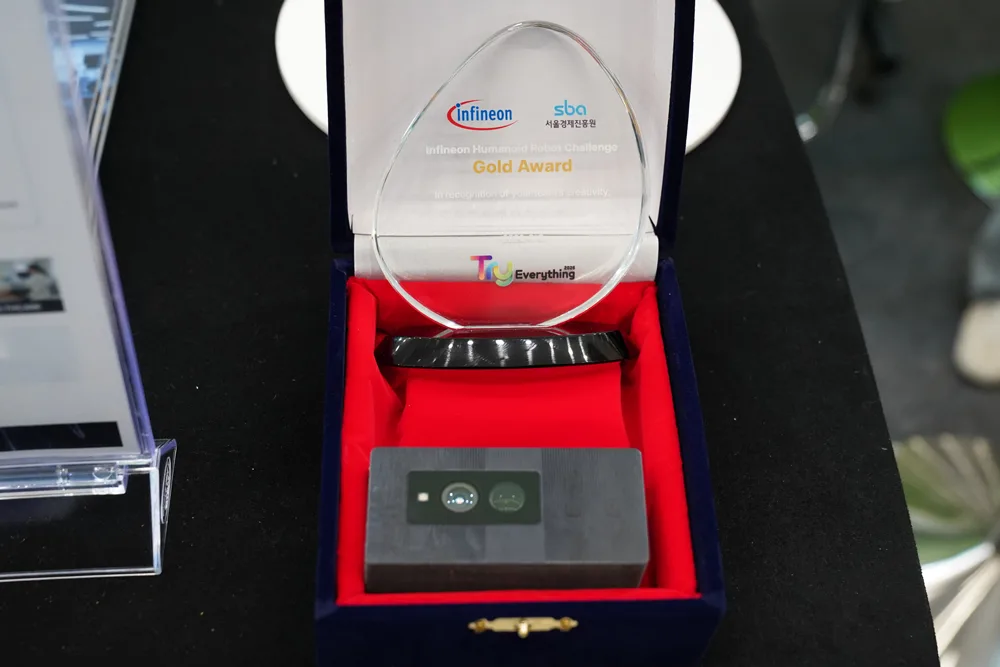
The line has three builds: MARU ONE, which packages the optics, edge computing, and I/O interfaces in one body; MARU Link, which joins optics and sensors side by side; and MARU Tower, which stacks sensing and computing vertically. Fitting the module to the job removes the excess and shortfall of performance that comes with a general-purpose camera, and by the company’s own estimate cuts final development cost by 30 to 40 percent and development lead time by up to 60 percent.
Physical AI projects have no dominant standard yet, so the sensor specifications and operating environment differ from one developer to the next. What sets us apart is that we remove the inefficiency of fitting a project to a general-purpose camera and supply the vision module each organization needs, quickly and to order.
The company plans to close the pre-Series A round now under way and then move on overseas markets, strengthening ties with the European partners it already works with toward a local base. It positions MARU as an alternative to Chinese-made vision hardware in markets where data-security concerns and regulation weigh on that choice. Kim added that the aim is to serve companies from the pilot stage through to volume production and become a vision infrastructure partner for the global physical AI market.
Source. Digital Chosun, “‘Try Everything 2026’ 로봇에 필요한 ‘눈’ 골라 붙인다…모디전스비전, 모듈형 비전 플랫폼 ‘MARU’ 공개” (in Korean), September 14, 2026. Summary and translation by ModigenceVision.